The Complete Fence Maintenance& Care Guide
How to maintain your wood, vinyl, aluminum, and chain link fence in Central Kentucky's climate. Seasonal schedules, cleaning methods, inspection checklists, and when it's time to call a professional.
How to Maintain Every Type of Fence in Kentucky's Climate
Each fencing material has different care requirements. Here's what it takes to keep your fence looking good and performing for the long term — tailored to Central Kentucky's humidity, freeze-thaw cycles, and seasonal weather.
The Material That Rewards Attention
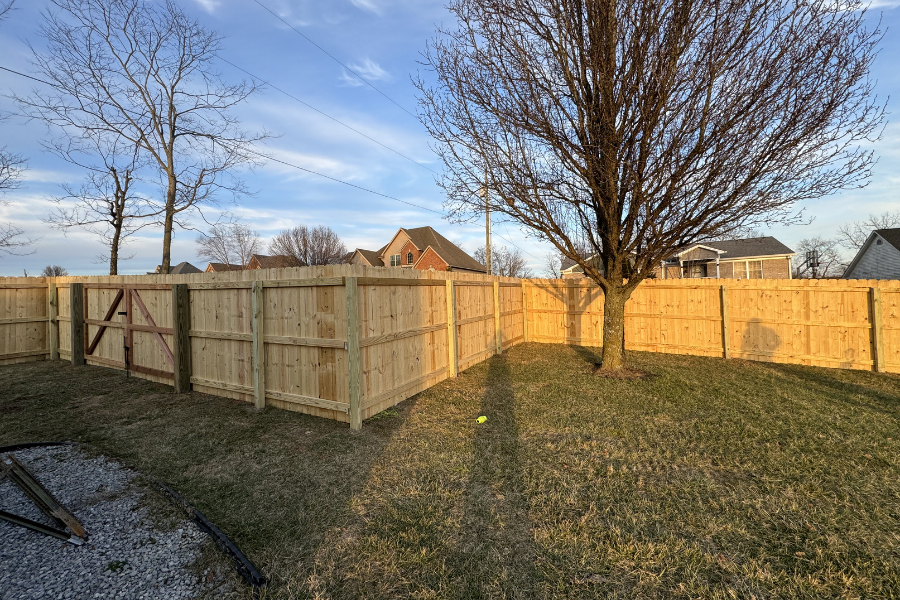
Wood fencing requires the most upkeep of any material — but that upkeep is straightforward and pays for itself in extended lifespan. A well-maintained wood fence lasts 20 years or more in Kentucky. A neglected one may only last 10.
Clean annually with mild detergent and a soft-bristled brush. Remove mold and mildew before they penetrate the wood grain. Avoid high-pressure washers — they blast open wood fibers and accelerate weathering.
Seal or stain every two to three years with an exterior product that includes UV inhibitors and water repellent. Wait three to six months before treating new pressure-treated lumber. Test your current seal by splashing water — if it absorbs rather than beading, it's time to reapply.
Inspect annually for loose boards, leaning posts, split pickets, and gate alignment. Replace damaged sections before decay spreads to adjacent boards. Call for professional repair when posts shift or the structure leans.
The Material That Practically Maintains Itself
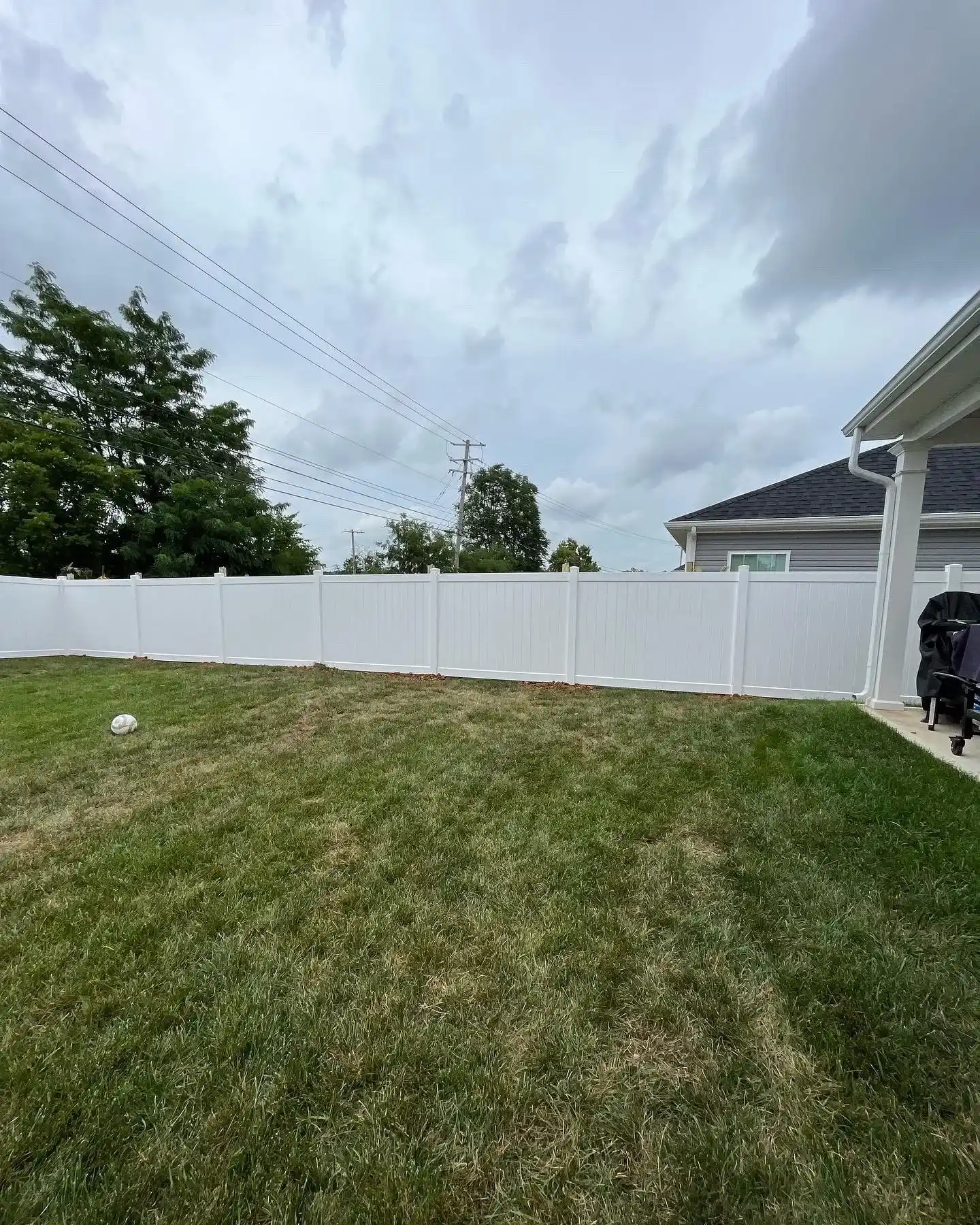
Vinyl fencing needs no staining, no sealing, and no painting — ever. The entire maintenance routine is an occasional cleaning.
Rinse with a garden hose to remove surface dirt, pollen, and debris. For deeper cleaning, mix warm water with a few drops of dish soap and scrub top to bottom with a soft-bristled brush.
For mold and mildew, spray a one-to-one mix of white vinegar and water, let it sit for five to ten minutes, scrub gently, and rinse. A diluted bleach solution also works for stubborn green stains.
Avoid abrasive scouring pads, acetone, paint thinner, and high-pressure washers. These damage the UV-protective surface finish and create micro-pits where dirt accumulates faster.
The Material Built to Be Ignored
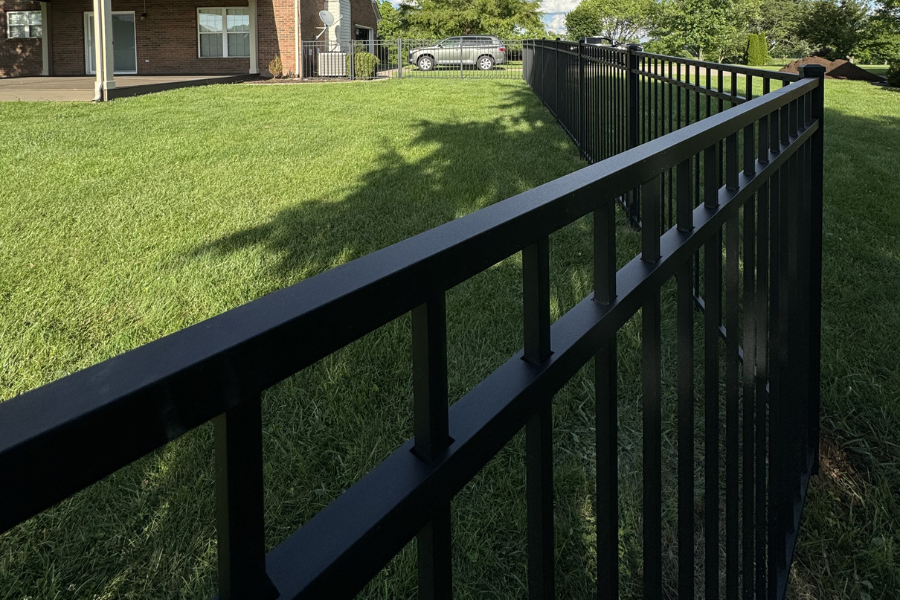
Aluminum fencing is virtually maintenance-free. The powder-coated finish resists rust, fading, and corrosion for decades without any intervention.
Rinse occasionally with a garden hose to remove accumulated dirt and pollen. That's the core maintenance routine.
Inspect gate hardware and hinges once or twice a year. Lubricate moving parts with a silicone-based spray and tighten any loose screws. Check for scratches that expose bare aluminum and apply touch-up paint to prevent localized oxidation.
No painting, staining, or sealing required — the factory powder coat is the finish for the life of the fence.
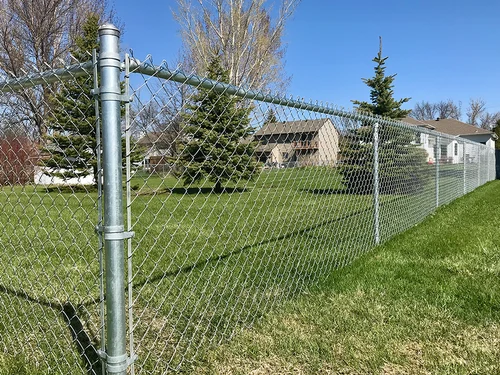
The Material That Just Works
Chain link fencing is the lowest-maintenance option available. The galvanized zinc coating protects the steel from rust for decades under normal conditions.
Inspect periodically for rust spots — especially where the mesh attaches to posts and at tension bands. Treat any surface rust with a wire brush and a rust-inhibiting spray paint before it spreads.
Tighten tension bands if the fabric begins to sag. Check that the top rail hasn't shifted and that gate latches close securely.
Keep vegetation trimmed away from the fence line. Vines, ivy, and dense shrubs trap moisture against the galvanized coating and accelerate corrosion at the base. Vinyl-coated chain link requires even less attention since the PVC sheath adds extra protection.
Know When to Call a Professional for Fence Repair
Leaning posts, storm damage, extensive rot, and gates that won't close are structural issues — not weekend projects. Chafin Fence repairs every type across Central Kentucky.
Kentucky Fence Maintenance — Season by Season
Central Kentucky cycles through hot humid summers, heavy spring rains, and freeze-thaw winters. Here's what your fence needs in each season.
Spring
Walk the fence line and inspect for winter damage — shifted posts, cracked boards, loose hardware. Clean surfaces of pollen and winter grime. Tighten gate hinges and oil latches. Schedule staining or sealing if the water test shows absorption.
Summer
Apply stain or sealant when conditions are dry and warm — ideal application weather. Trim vegetation away from the fence line to promote airflow and prevent moisture trapping. Rinse vinyl and aluminum fences to remove accumulated dust.
Fall
Clear fallen leaves and debris from the fence base — wet leaves trap moisture against wood and metal. Trim back bushes, vines, and overhanging branches before winter. Final hardware check before the freeze-thaw season begins.
Winter
Gently shake heavy wet snow off fence panels to prevent bending or sagging. Avoid using salt or chemical de-icers near the fence line — they can corrode metal hardware and damage wood fibers. Note any damage for spring repair.
The Most Common Questions About Fence Care
Fence Need More Than Maintenance? We Can Help.
When routine care isn't enough, Chafin Fence provides professional repair and restoration across Lexington and Central Kentucky. Free on-site evaluations — we'll tell you whether a repair or a replacement makes more sense for your situation.