Horse & Equine Fence Installationin Lexington, KY
Board fencing, no-climb wire mesh, and paddock enclosures built for the Bluegrass — where the safety of your horses and the integrity of your property are the same conversation.
Equine Fencing Engineered for Safety, Visibility & the Kentucky Landscape
Central Kentucky is horse country — and horse fencing is not the same job as residential or commercial fencing. The stakes are different. A horse that panics can hit a fence at 30 miles per hour. The wrong material, the wrong height, or the wrong mesh size can mean a veterinary emergency instead of a contained animal.
At Chafin Fence, we install equine fencing across Lexington, Versailles, Paris, Georgetown, and the surrounding Bluegrass region — in traditional board, no-climb wire mesh, and combination systems designed around the specific safety requirements of horses, ponies, and foals. Every installation is built to the 54-to-60-inch height standard, uses horse-safe materials, and follows the containment principles that Kentucky farm and agricultural fencing demands.
Licensed, insured, and backed by our five-year craftsmanship guarantee.
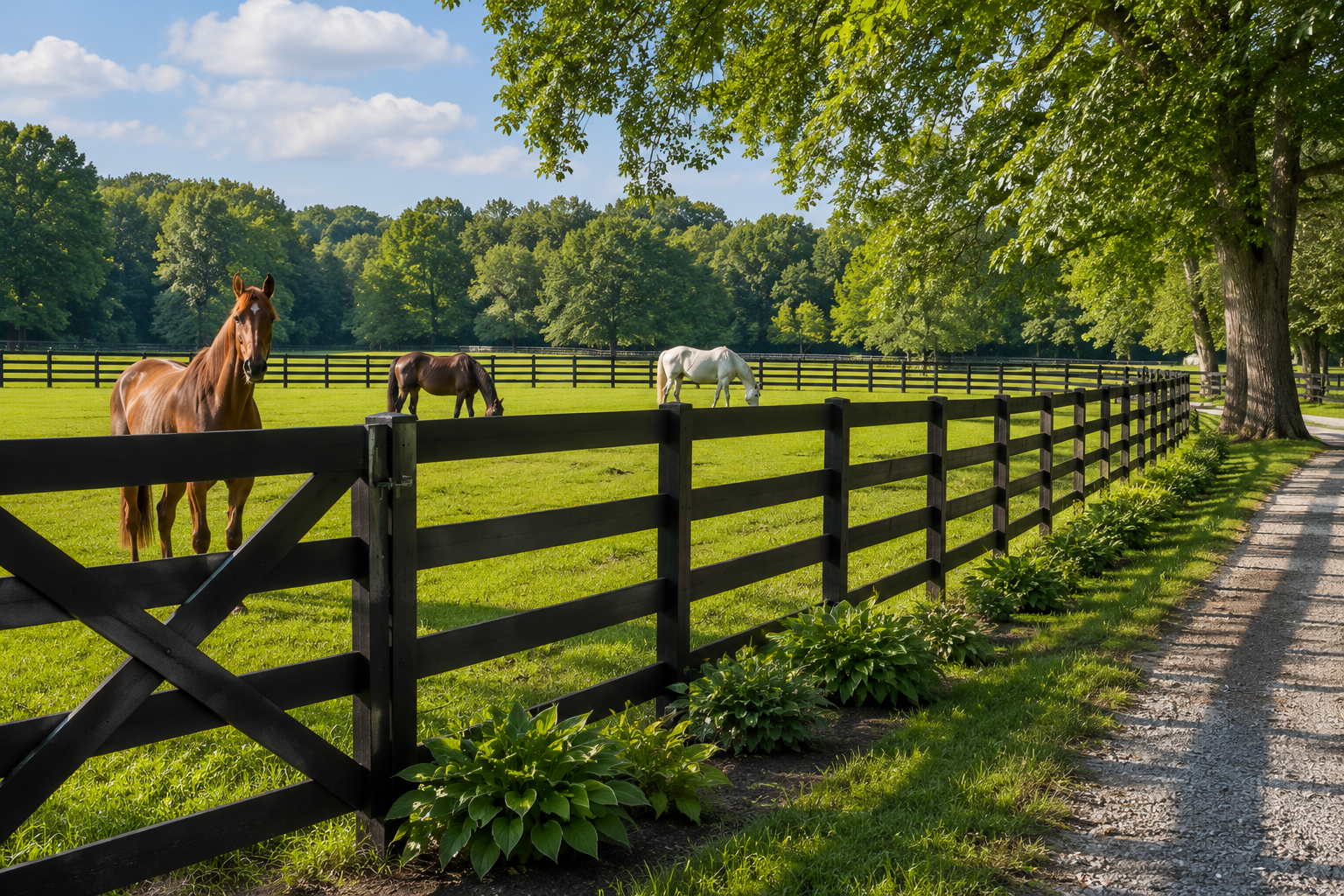
Three Proven Systems for Horse Properties
Every horse property has different containment needs. Here are the three fence types we install most across Central Kentucky's equine properties — each built around horse safety first.
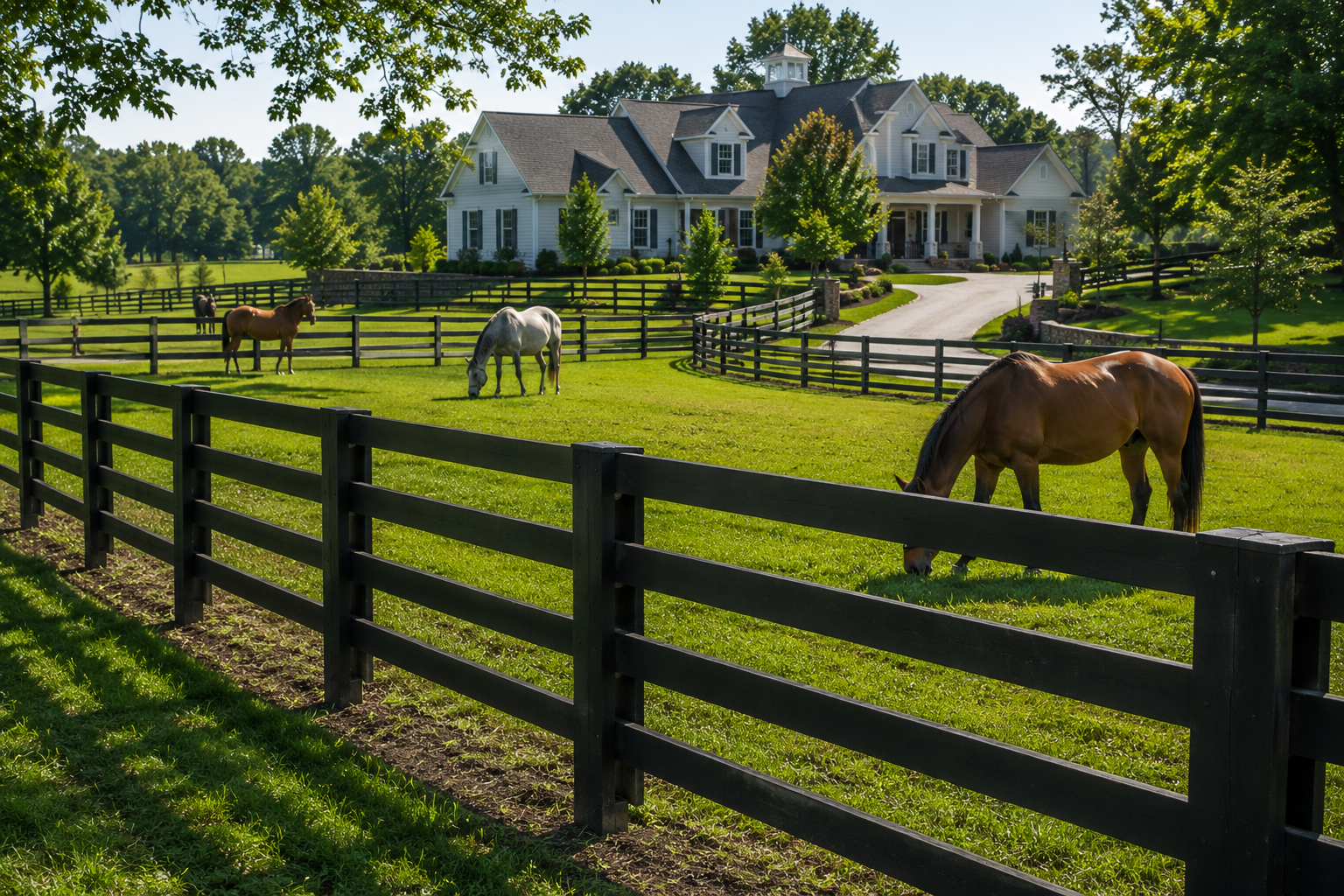
Post-and-Rail Board Fencing
The classic Kentucky look. Three- and four-rail board fencing provides maximum visibility, a strong physical barrier, and the traditional Bluegrass aesthetic. Ideal for high-visibility paddocks, front pastures, and premium equestrian facilities.
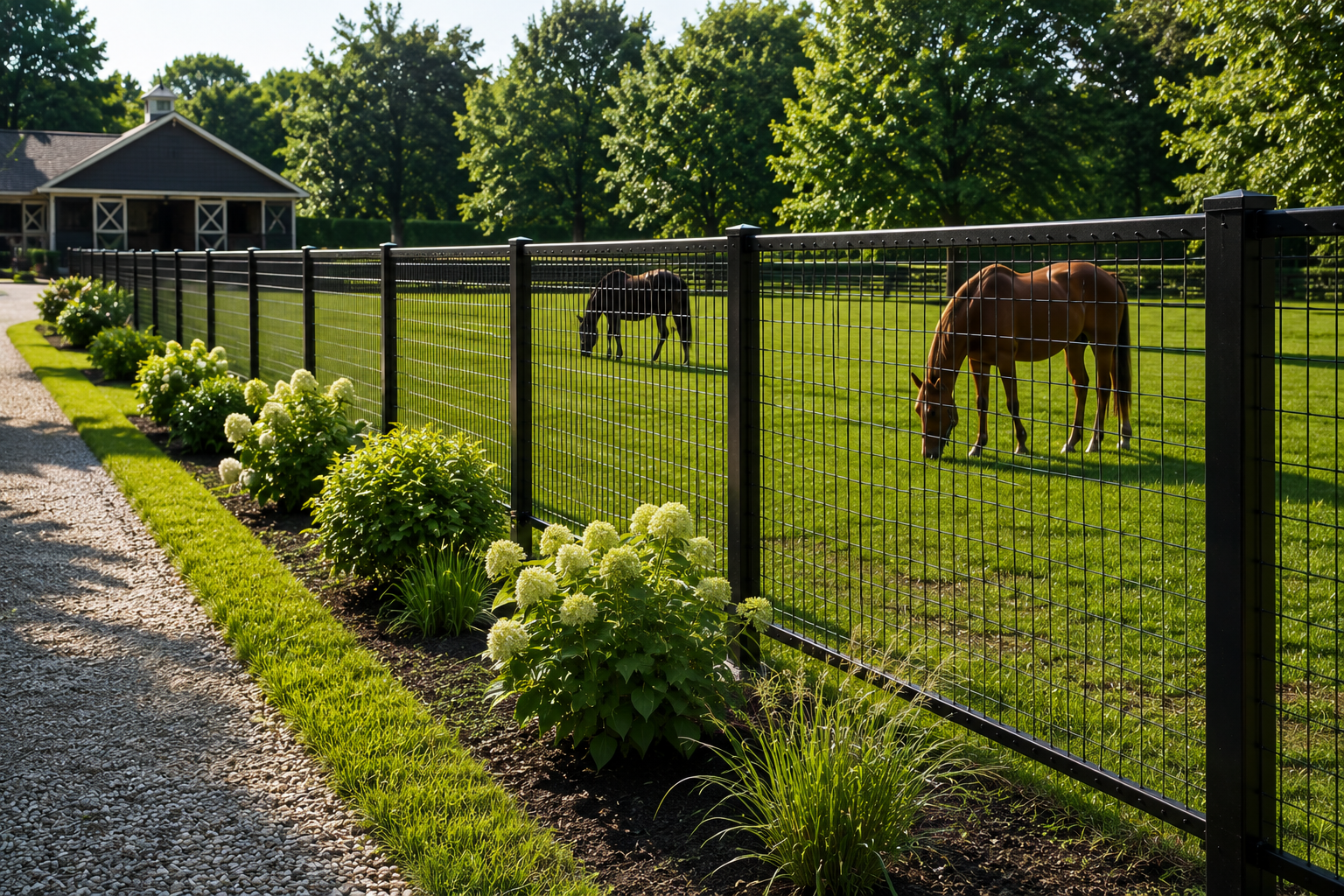
Equine No-Climb Wire Mesh
Tightly spaced 2×4-inch galvanized mesh prevents hoof entanglement and keeps foals, ponies, and small livestock safely enclosed. Cost-effective for large pastures and boundary fencing. Always installed with a wooden top rail for visibility.
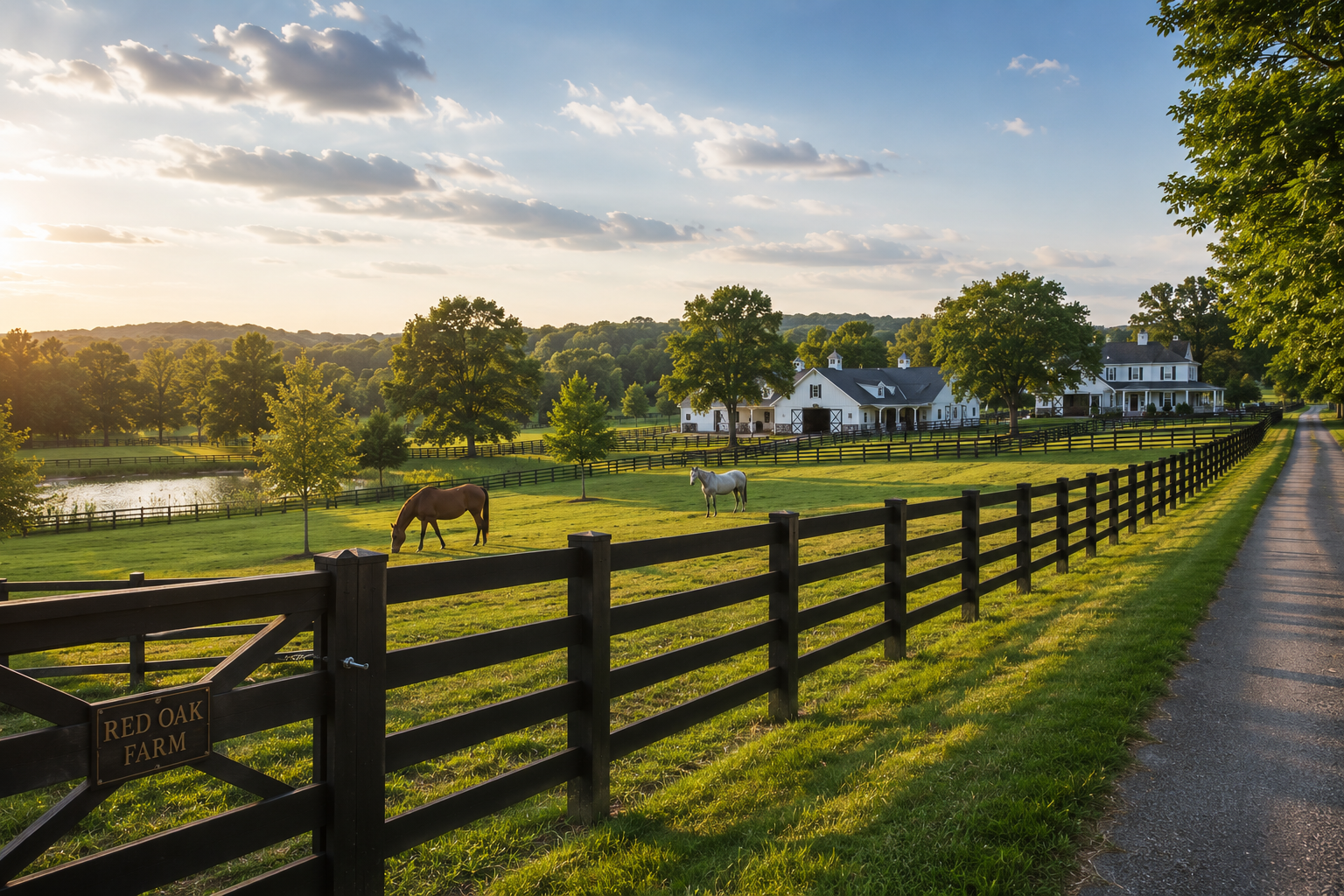
Farm Perimeter & Combination Systems
Large-acreage boundary fencing combining board rails with wire mesh or high-tensile strands. Covers maximum ground while maintaining containment integrity across rolling Bluegrass terrain.
Every Fence We Build Starts with the Horse's Safety — Not the Property Line
Visibility. Impact absorption. Containment integrity. The principles that keep horses safe are the principles that guide every installation decision we make.
What Horse Owners Need From a Fence — and What Goes Wrong Without It
Horse fencing is not residential fencing built taller. The materials, the height, the mesh size, and the installation standards all serve a different purpose — keeping a 1,000-pound flight animal safely contained.
Visibility Prevents Panic
Horses must be able to see the fence before they reach it. Board fencing and top-railed wire mesh are visible at speed. Single-strand wire and low-visibility mesh are not — and a horse that doesn't see the fence will run through it.
54–60 Inches Is the Standard
Horse fencing must reach wither height — 54 to 60 inches above grade — to discourage jumping and prevent horses from leaning over the top rail. Anything shorter invites escape attempts and injuries.
No Barbed Wire — Ever
Barbed wire causes severe, permanent injuries to horses. It lacerates skin, tangles legs, and creates veterinary emergencies. We do not install barbed wire on any equine property. Safe alternatives — board, mesh, and electric braid — deliver containment without the risk.
2×4-Inch Mesh Prevents Entanglement
No-climb equine mesh uses tight 2×4-inch openings specifically designed so that hooves cannot pass through. Standard field fencing with larger openings is a hoof-catch hazard — and a panicking horse caught in fence wire is a dangerous emergency for animal and handler both.
Rails on the Inside of Posts
Board rails must be mounted on the inside face of posts — facing the horses. When a horse pushes against the fence, the rail compresses against the post instead of popping off. This detail is the difference between a fence that holds and one that fails under pressure.
Built for Bluegrass Terrain
Central Kentucky's rolling hills mean the fence line is rarely flat. Every Chafin Fence equine installation follows the natural grade — racking panels and stepping posts to maintain consistent height and containment across slopes, valleys, and creek crossings.
From Consultation to Finished Fence — How an Equine Project Runs
Every horse property is different. Our process accounts for terrain, herd size, paddock layout, and the specific containment requirements of your operation.
Property Walk & Consultation
We walk your fence line, assess terrain, discuss herd size, paddock configuration, and gate placements. Free estimate, no obligation.
Material & Design Selection
Board, no-climb mesh, combination systems. Rail count, post spacing, height, and gate specifications — all matched to your horses and your property.
Utility Locates & Prep
Kentucky 811 utility locates before any digging. Site cleared and prepped for clean, efficient installation across the full fence line.
Professional Installation
Posts set deep in concrete. Rails mounted inside. Mesh tensioned and secured. Gates plumbed, aligned, and latching correctly. Every detail built to equine safety standards.
Walkthrough & Warranty
Final inspection of every post, rail, gate, and mesh section. Our 5-year craftsmanship guarantee on the workmanship.
Five-Star Service Across Lexington & the Bluegrass
"Not only does our fence look amazing, Nick and his crew were so easy to work with. They were helpful in a difficult situation and were happy to go above and beyond! And they got us scheduled quickly and got the job done fast. Honestly can't recommend this company enough."
"My husband and I could not be happier with the work Nick and his guys did with our fence! Communication was great, along with quality. Would definitely recommend Chafin Fence."
"We love our new fence and so do our dogs! Highly recommend Chafin. They were so efficient and thoughtful throughout the whole process."
"Nick and his team were great to work with! They did an absolutely amazing job on our fence!"
"…and it looks great. It was a pleasure to work with them."
The Most Common Questions Horse Property Owners Ask
Ready to Fence Your Horse Property the Right Way?
Free on-site consultations across Lexington, Versailles, Paris, Georgetown, and the surrounding Bluegrass region. We'll walk your fence line, talk through containment needs, and put together a real quote — built around your horses, not a generic template.