Four-Board Horse Fence in Lexington, KY
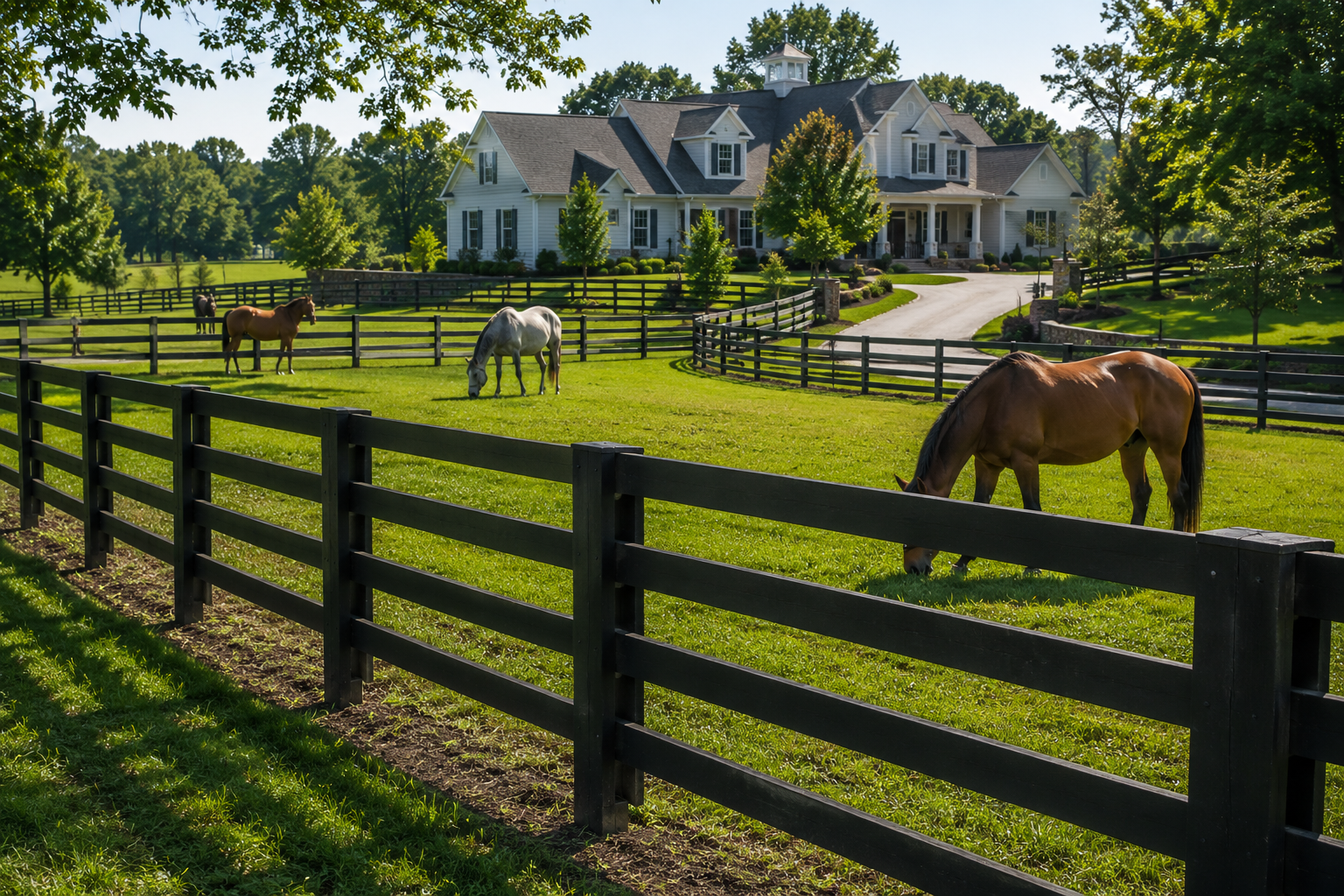
The fence the Bluegrass is known for, built the way the big farms build it: heavy posts eight feet apart, four boards on the horse side, braced corners, painted black or white. Installed across Lexington and the horse counties around it.
Four-Board Fence, Central Kentucky
Four boards, not three. The difference is the gap.
A three-board fence leaves openings wide enough for a horse to push a head through and panic. A fourth board cuts those gaps roughly in half, which is why the breeding farms around Lexington settled on four-board as the standard for foals, yearlings, small paddocks and anything along a road. It's a safety decision first and a look second, and it happens to be the best-looking fence in Kentucky.
Chafin Fence builds four-board and three-board horse fence across Lexington, Fayette County and the surrounding horse counties: oak or treated boards on heavy posts, rails fastened on the horse side so a leaning animal pushes the board into the post instead of off it, H-braced corners, and paint or stain in black or white. We also run no-climb mesh behind the boards where foals, minis or dogs share the fence line.
This page is the four-board build in detail. For every equine system we install, see horse fence installation in Lexington.
All farm fence services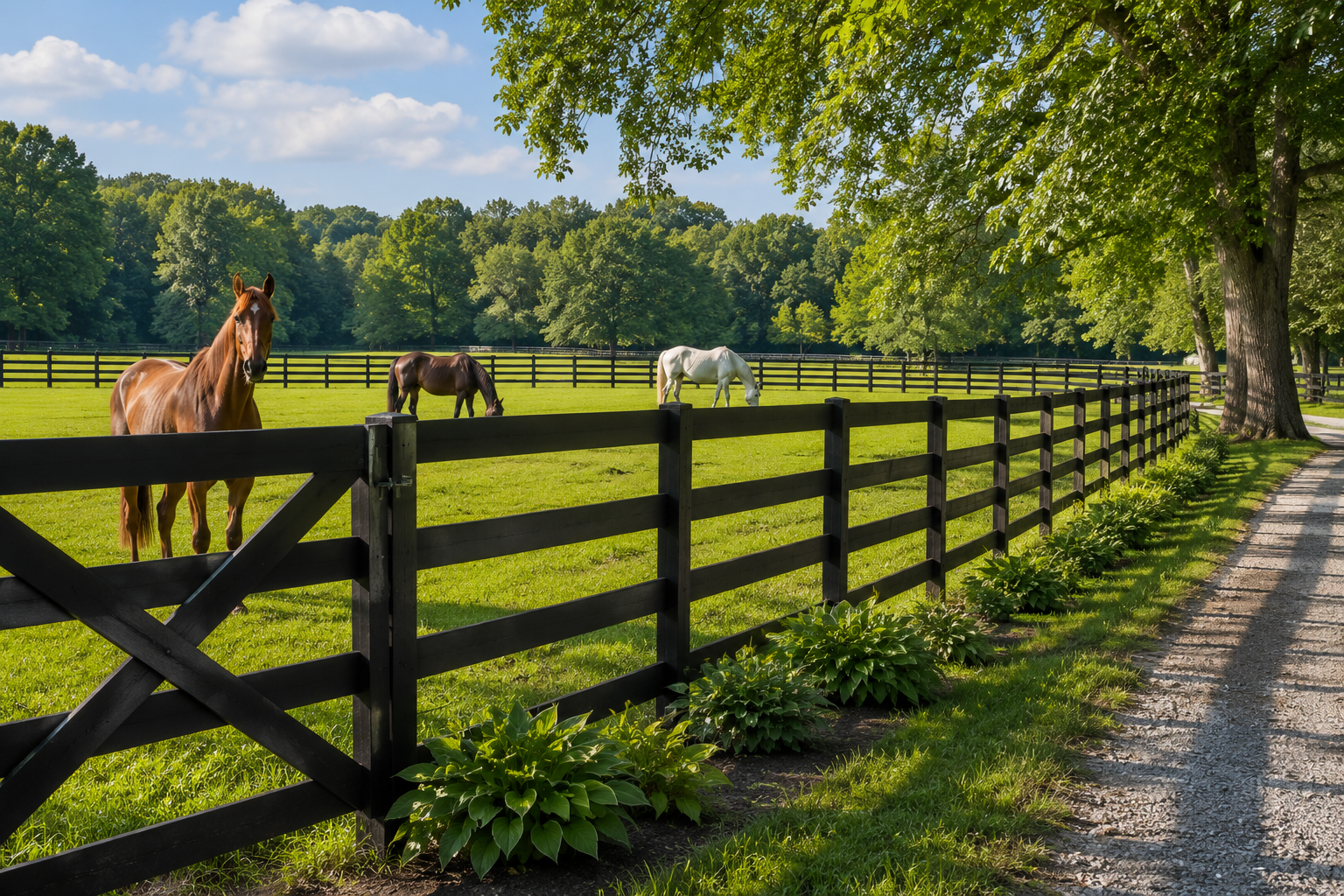
Anatomy of a Kentucky Board Fence
What's in one eight-foot section, and why each piece is where it is.
Three-Board vs Four-Board
Which runs need four boards, and which can be three.
Most horse properties end up with both. The front drive, the foaling paddocks and the road frontage get four; the back pasture for mature geldings can take three.
| Consideration | Three-board | Four-board | Four-board + no-climb mesh |
|---|---|---|---|
| Gap between rails | Wide, about a foot or more | Roughly half the three-board gap | Closed off entirely by mesh |
| Best for | Mature horses, large pastures, open boundary lines | Foals, yearlings, small paddocks, road frontage, mixed herds | Foals, minis, ponies, dogs, anything that shares the paddock |
| Visibility | Lighter, more open look | Solid, substantial Bluegrass look | Same as four-board, mesh nearly disappears at distance |
| Head-through risk | Present on curious or crowded horses | Largely eliminated | Eliminated, plus no hoof-through or under-rail escape |
| Cost position | Lowest board fence | One more board and more fasteners per section | Highest, mesh and tensioning added |
| Upkeep | Paint cycle, occasional board | Same, one more board per section to maintain | Same, plus a tension check on the mesh |
Black or White
Why most of the Bluegrass went black.
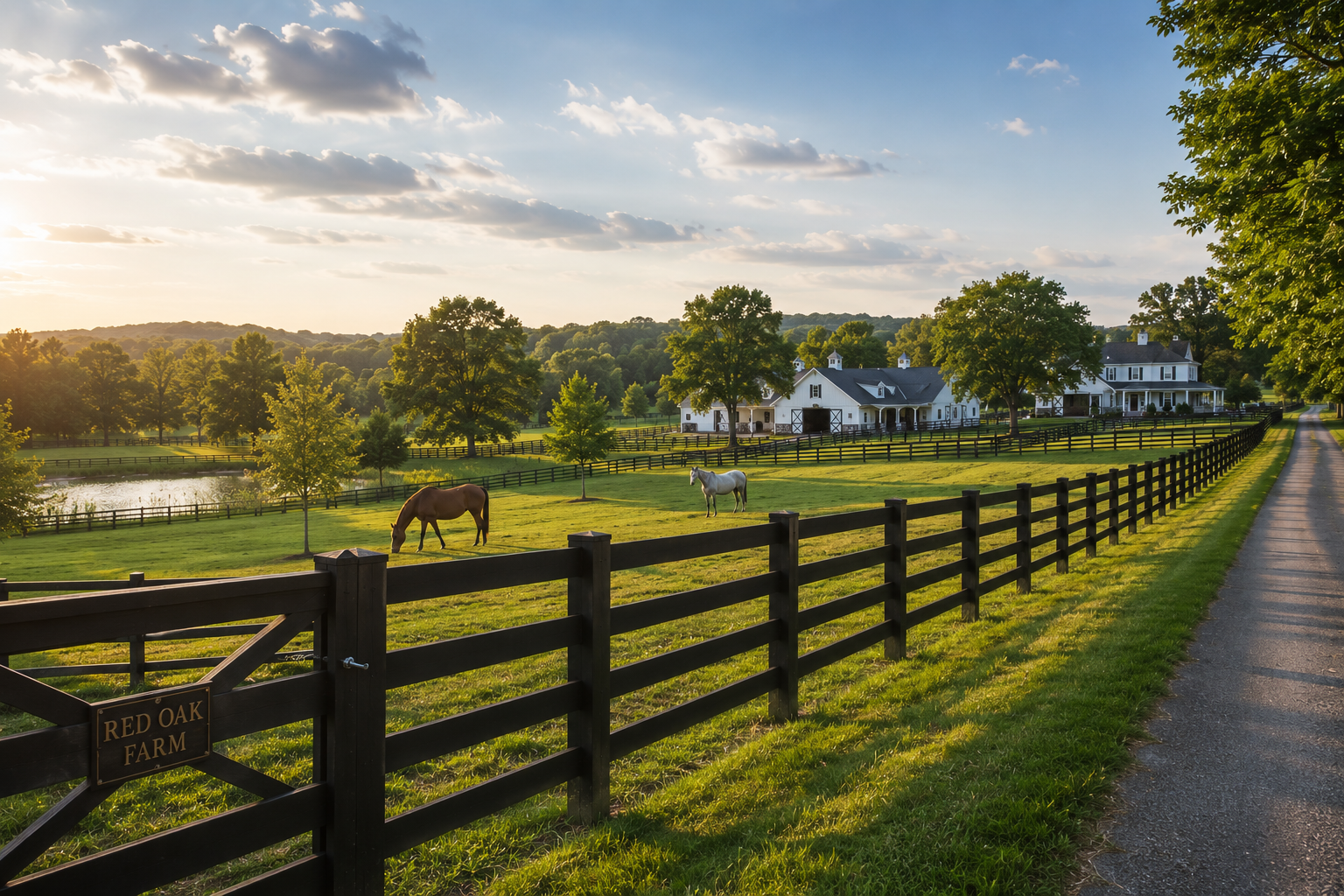
White board fence is the postcard, and we paint plenty of it along front drives. But most working farms around Lexington switched to black years ago, and the reason is upkeep: black hides dirt, mildew and weathering, and goes noticeably longer between coats. White shows every mark and needs repainting more often. Either way, the fence gets painted or stained after it's built so the end grain and the fastener heads are sealed.
- Black paint or stain: the low-maintenance choice for pastures and perimeter lines
- White paint: the classic look for front drives and show paddocks, on a tighter repaint cycle
- Natural oak: left to weather silver, no paint cycle at all
Wood, Posts & Mesh
Oak or treated, and when to add wire.
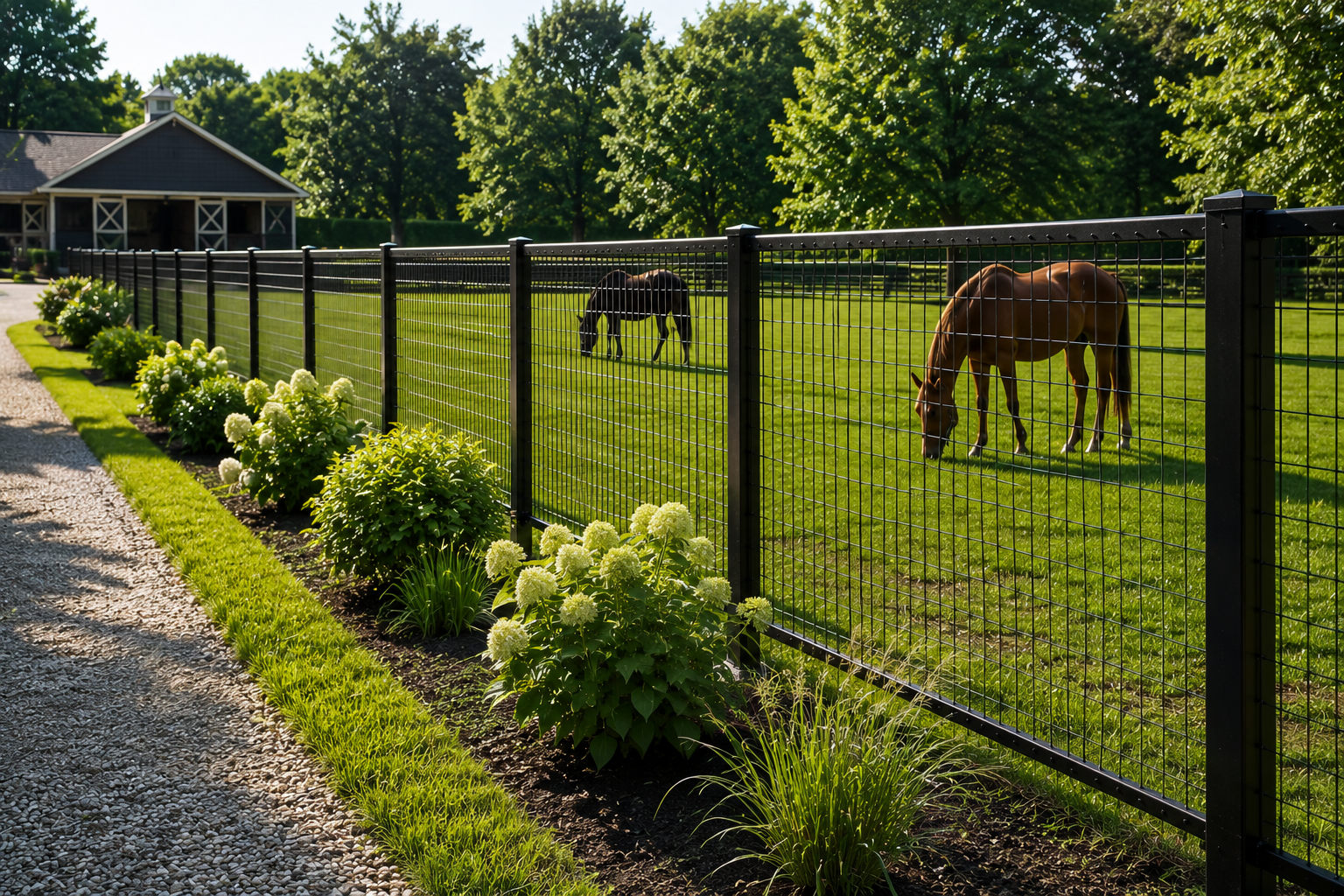
Rough-sawn oak boards are the traditional Bluegrass build: dense, hard to chew, and the strongest board you can put on a fence. Treated Southern yellow pine costs less and takes paint well. Poplar is the light, paintable option. Posts go in heavier than any residential fence, because a horse leaning on a top rail puts a load on the post that a backyard fence never sees.
- Add no-climb mesh for foals, miniatures, ponies and dogs, stretched on the horse side behind the boards
- Add a hot wire along the top board for chewers and fence-leaners
- Farm gates hung on braced posts, sized to the opening and the equipment that has to pass
Built the way the farms build it, on any size property.
You don't need a hundred acres to get a proper Kentucky board fence. We build the same spec on a two-horse paddock behind a house in Lexington as on a perimeter line in Woodford County.
How We Build It
From the property walk to the last coat of paint.
Walk the line
Terrain, corners, gate locations, where the horses crowd, where the road is. We mark the runs that need four boards and the ones that can take three.
Spec and firm quote
Species, post size, height, paint or stain, mesh where it's needed. Written price on site, no surprises after we start.
Kentucky 811 and layout
Utilities located before any digging. Line strung, post holes marked on eight-foot centers, following the grade across slopes and dips.
Posts and braces
Posts set deep and plumb, corners, ends and gate posts H-braced so the line stays straight for decades.
Boards on the horse side
Four boards fastened on the inside face, laps staggered, joints covered with a face board. Mesh stretched and stapled where specified.
Gates, paint, walkthrough
Gates hung square, fence painted or stained, every post and board checked with you. 5-Year Craftsmanship Guarantee on the work.
Chafin Fence LLC is a BBB Accredited Business, licensed and insured across Central Kentucky's horse counties. Every board fence we build carries our 5-Year Craftsmanship Guarantee: if a post we set or a brace we built lets go, we come back and make it right.
Board Fence FAQ
Questions from Kentucky horse owners.
It's the post-and-board fence you see on every horse farm around Lexington: wood posts set about eight feet apart with four horizontal boards fastened to the horse side, usually painted black or white. Four boards instead of three closes the gaps so a horse can't get a head or a leg through, which is why it became the standard on Bluegrass breeding farms and why it's still the fence most horse owners here ask for by name.
We build to wither height, which for most riding horses means a top board around 54 to 60 inches above grade. Four feet is the floor for calm mature horses in big pastures and too short for anything that leans, reaches or jumps. Ponies and miniatures can run lower; stallion paddocks and road frontage go to the top of the range.
Three-board is the open-pasture fence: lighter look, lower cost, fine for mature horses on acreage. Four-board cuts the gaps between rails roughly in half, so it's the right call for foals, miniatures, mixed stock, small paddocks, anywhere horses crowd a fence line, and along roads where a horse getting through is a serious problem. If you're unsure, we'll walk the property and tell you which runs need four boards and which can be three.
Rough-sawn oak boards on treated or oak posts is the traditional Bluegrass build and the strongest. Treated Southern yellow pine boards cost less and take paint well. Poplar is lighter and common on painted fences. We'll match species to your budget and how hard the fence will be used, and we size posts heavier than a residential fence because a horse leaning on a rail puts far more load on it than a person ever will.
Mostly upkeep. Black paint or stain hides dirt, mildew and weathering, and goes noticeably longer between coats than white, which shows every mark and needs repainting more often. Many large farms around Lexington switched from white to black for that reason. White is still the classic look along a front drive, and we paint either one; the choice is yours.
We quote every board fence after we walk the property, because the number depends on linear footage, terrain, how many corners and gates there are, species and whether you want it painted or wire-backed. We'll give you a firm written price on site and tell you where three-board or a mesh combination would save money without giving up safety. Call (859) 552-8763 or request a free visit.
Yes, and we recommend it for foals, miniatures, dogs or anywhere small stock shares a paddock. Two-by-four-inch no-climb mesh is stretched on the horse side behind the boards so hooves can't get through and nothing can slip under the bottom rail, while the boards keep the fence visible. It can be built into a new fence or added to an existing board line. See our livestock and agricultural fencing for mixed-stock systems.
A well-built oak or treated board fence in Central Kentucky lasts decades with basic upkeep: a fresh coat of paint or stain on a regular cycle, cracked or chewed boards swapped as they appear, and posts kept clear of standing water. The rails fail long before the posts if the fence was set properly, and a single board is a quick, inexpensive repair. We also repair and re-board fences other companies built.
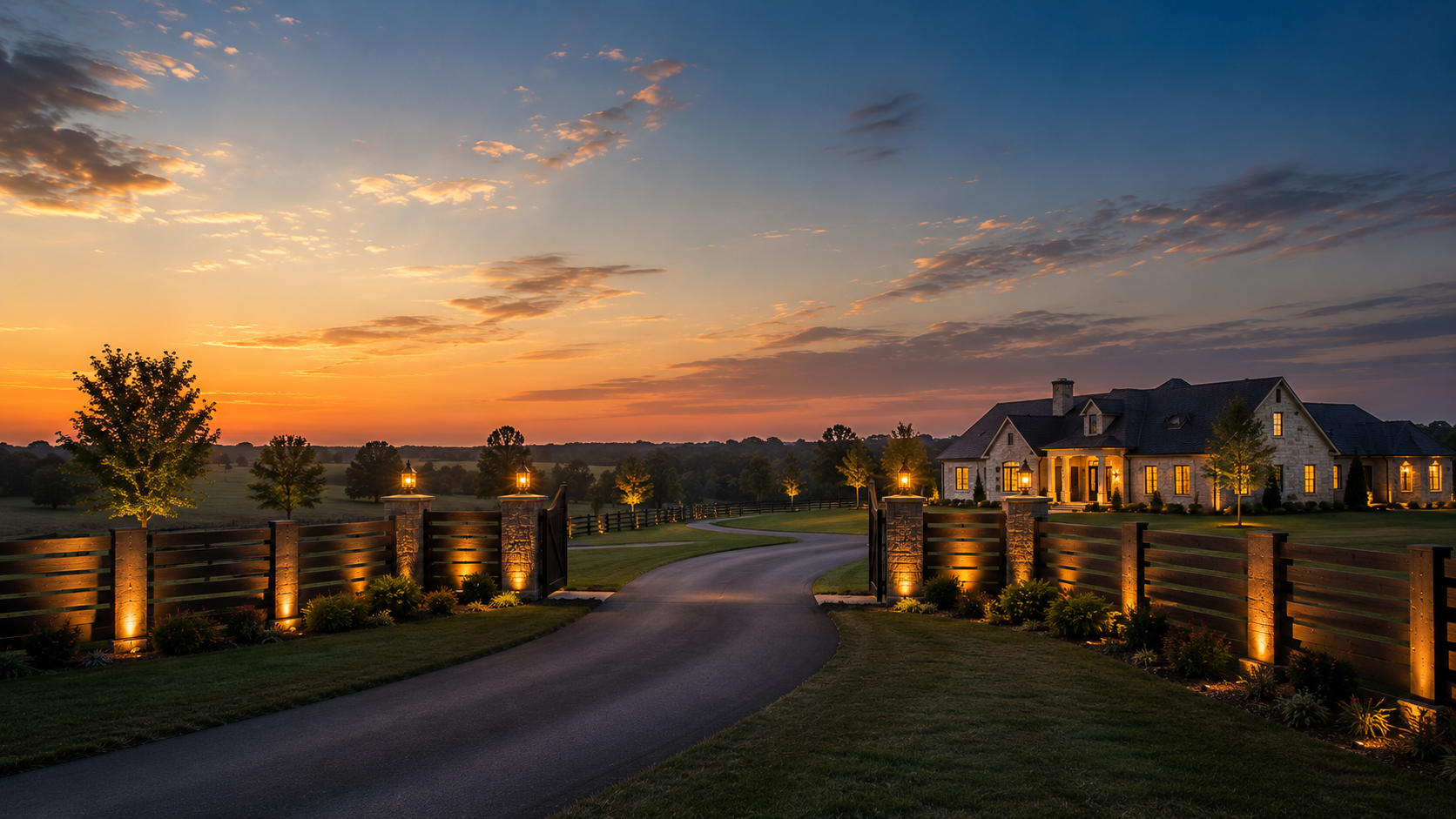
Fence it the way the Bluegrass does.
Free property walk across Lexington and the horse counties around it. We'll mark the runs, talk through three-board, four-board and mesh, and hand you a firm quote on site.